Digital Zines
The Latest Issue
No. 16 - August 2026 (Keyboarding)
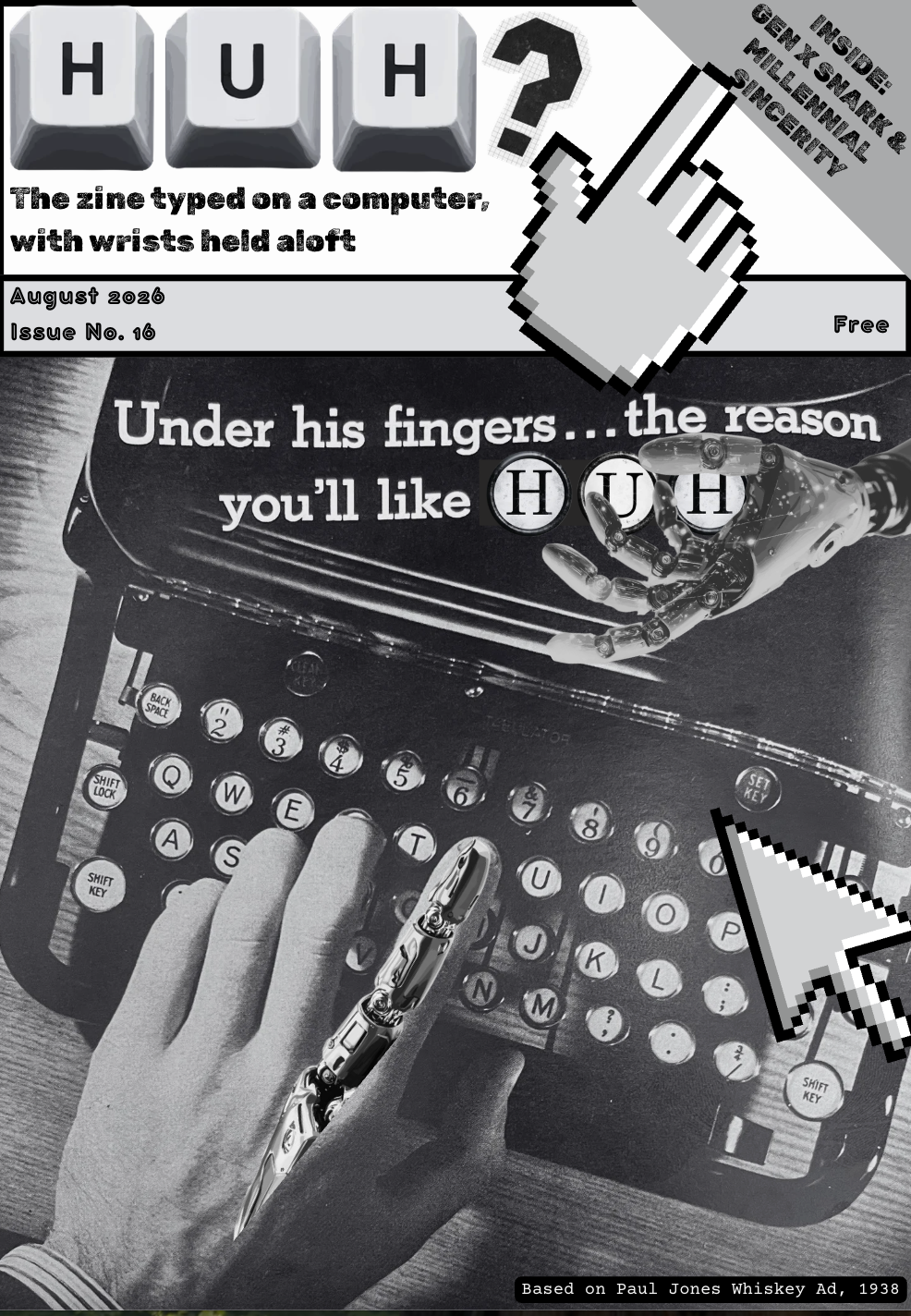
When I was in sixth grade, I was required to take a semester-long “keyboarding” class. Its newfangled title may have convinced a parent or two of the school district’s commitment to computer education, but the class remained largely what it had been in decades past — a typing class. The class met in a hastily arranged “computer lab” and students used actual — if not exactly state-of-the-art — computers.
The typing instruction itself was a holdover from the past. Our textbook had extensive passages about how to replace typewriter ribbons and the benefits of correction tape. Our teacher — one Mrs. Nolan — insisted that we keep our wrists up at all times and add two spaces after every sentence. We were to touch nothing on the computer save the word processing software and a rudimentary typing program that measured our accuracy and speed. The magical machine of the future would have to wait until Mrs. Nolan was done with her recitation of letters and spaces.
I have often felt that I was stuck between times, living tiny moments between the old and the new. Computers eclipsed typewriters, but in the moment between the two there was a keyboarding time that was neither one or the other, or maybe was somehow both. This zine thinks about how we can make the time we live in our own.
Past Digital Zine Issues
-
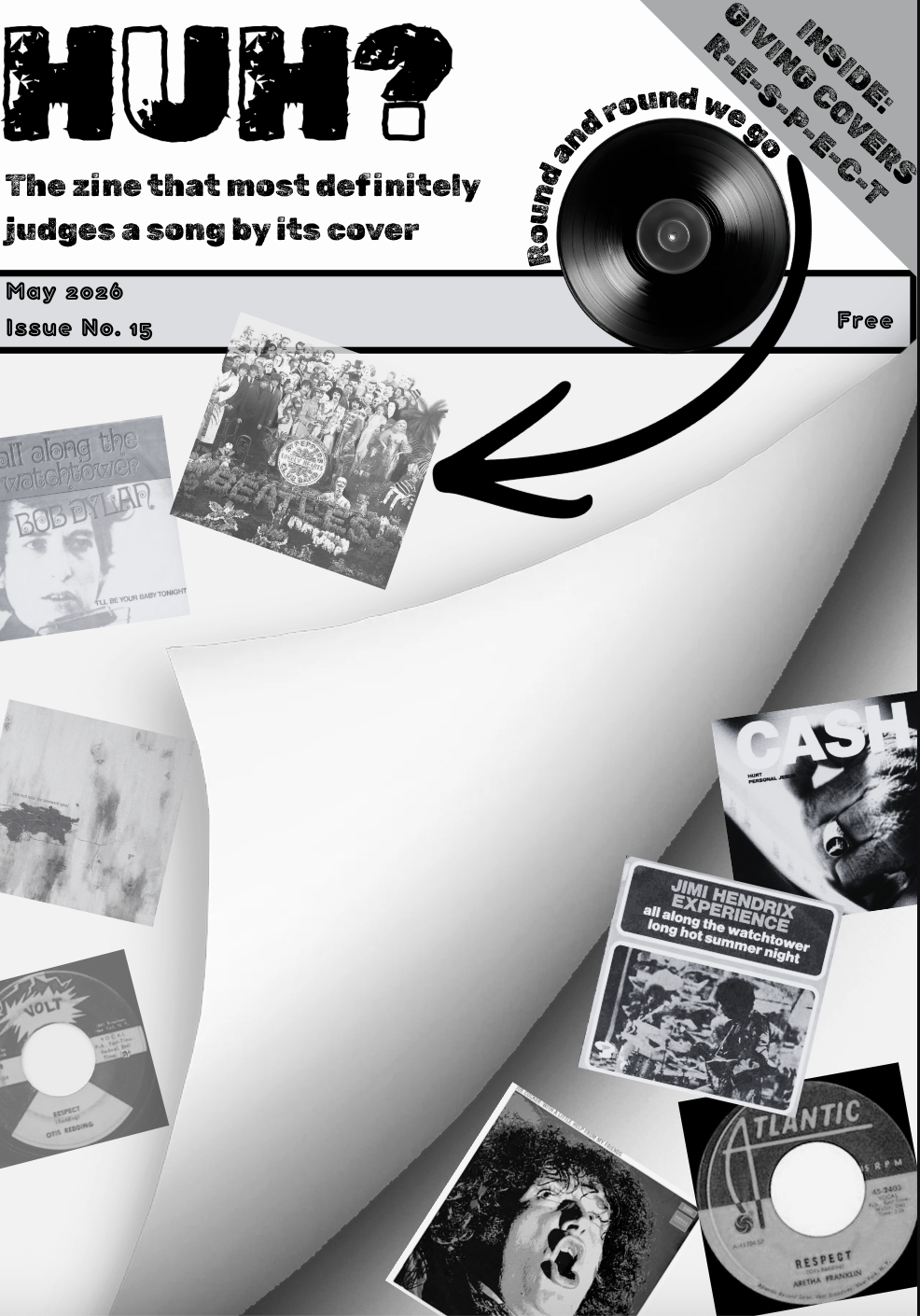
No. 15 - May 2026 (Song Covers)
I used to think that song covers were lazy. But when I hear Joe Cocker’s “With a Little Help from My Friends” or Jimi Hendrix’s “Star Spangled Banner,” I hear the work — the care, really — of building something new from something old. I hear a sense that things can and will be better — and that we have the right to work to make it so. That’s a message that we could all use right now.
-
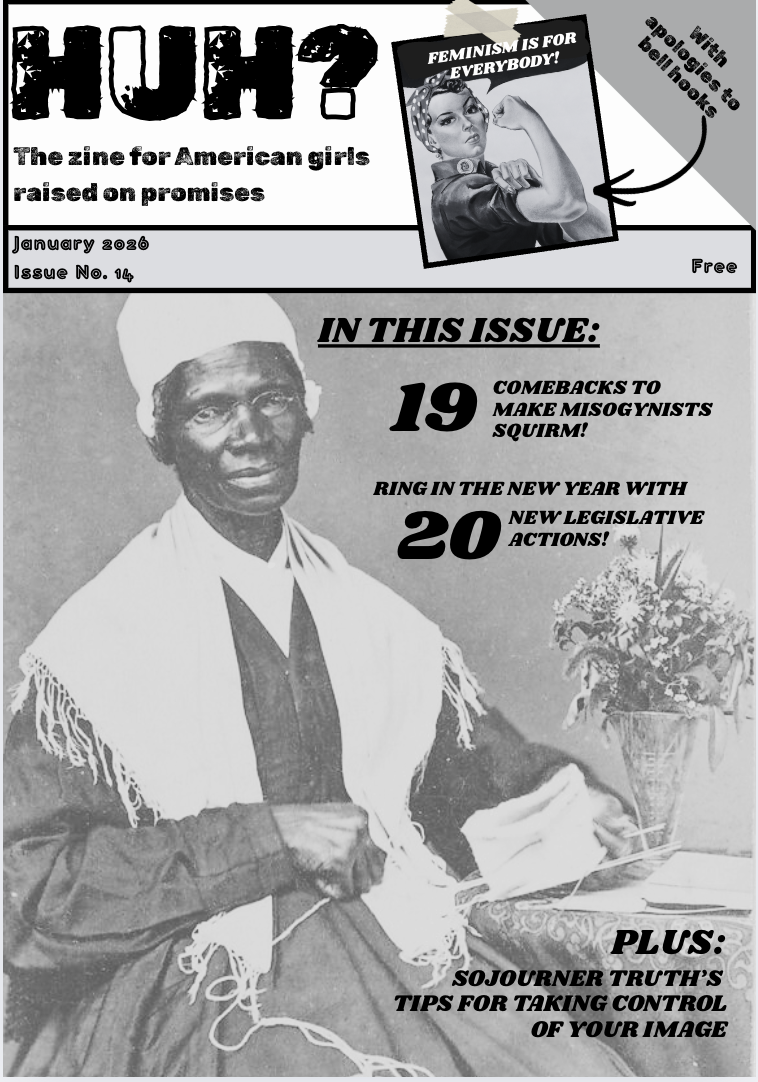
No. 14 - Jan. 2026 (American Girl)
I’ve been thinking about American girls lately. Renee Good. Becky Pepper-Jackson. Then, I think, the world that I am sending my own American daughters into is awfully dark right now. And finally, the refrain from the Tom Petty song: “Well, she was an American girl/Raised on promises.” There’s precious little to back the promise—except maybe us.
-
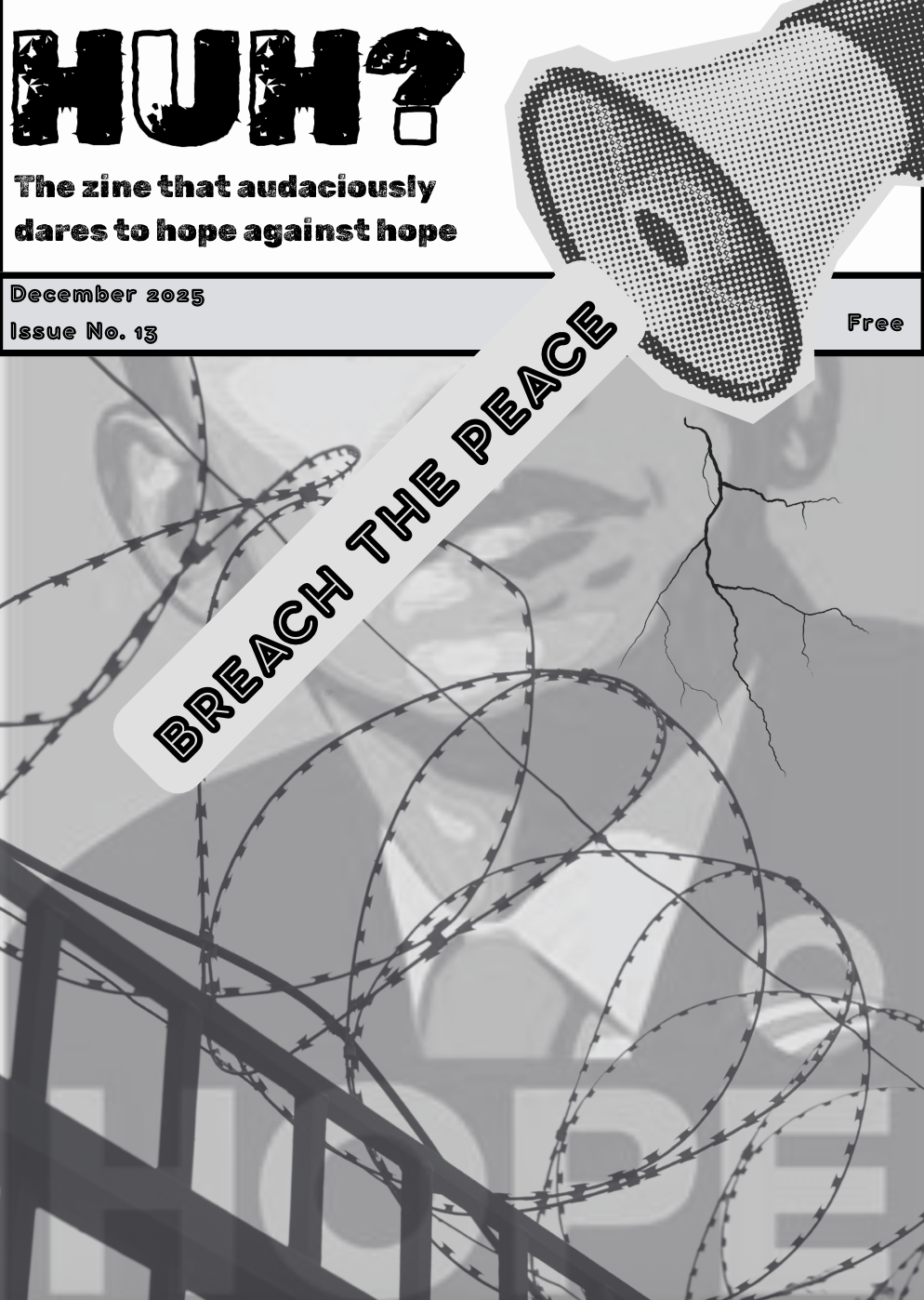
No. 13 - Dec. 2025 (Hope)
What does it mean to embrace hope at such a dark moment? For Václav Havel, choosing hope is exercising power. Havel is interested in the world of everyday people—the world “below.” If people act in small, often subtle ways that push the regime to accept behaviors that were previously forbidden, momentum grows and applies pressure on the state to change.
-
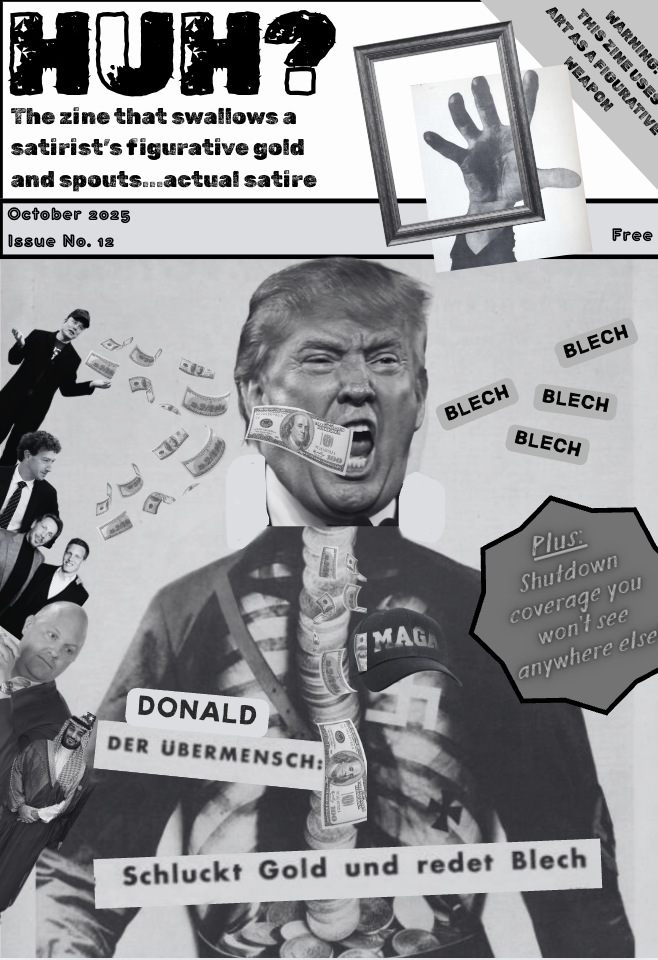
No. 12 - Oct. 2025 (John Heartfield)
John Heartfield pioneered the use of photomontages. He used scissors and glue to meld photographs together—almost like the pages of an early zine, though technically much more sophisticated. This issue considers how we might reassemble and use images and propaganda to subvert the messages that they were originally intended to send.
-

No. 11 - Sept. 2025 (Zinefest)
How do we create community in a form that is undeniably individualistic and often esoteric? One answer comes in zinefests where actual human beings talk to one another in actual physical spaces. The military is not (yet) on the streets of San Francisco, but it seems probable that it will be at some point. What does a zinefest look like when the walls are closing in around it?
-

No. 10 - Aug. 2025 (Tom Lehrer)
Are Lehrer’s songs offensive? Certainly. But it’s also that offensiveness—the incongruity between tragic reality, scathing lyrics, and upbeat tempo—that makes these works effective. It’s more ridiculous than funny, and that is why we laugh. In my view, situating satire within tragedy is one possible response to world news that reads like an SNL sketch.
-

No. 9 - July 2025 (Dave Barry)
Growing up, we never subscribed to a newspaper that carried the humorist Dave Barry’s column, but his books were always around our house. They were silly and irreverent, but, if you thought about them long enough, they were still silly and irreverent, and very, very funny. We could all use that—and a stiff drink—right now.
-

No. 8 - June 2025 (AIDS Activism)
In 1991, AIDS activists put a giant condom over Jesse Helms’ house. The condom was emblazoned with the words, “A condom to stop unsafe politics. Helms is deadlier than a virus.” The action was funny, to be sure, but also deadly serious. AIDS activists coupled the inside game with the outside game but also never lost sight of laughter itself as a worthy goal.
-

No. 7 - May 2025 (Blacklist)
My interest in the blacklist was connected to the somewhat incomprehensible and alarming idea that people could be erased. There are carryover effects of erasure. Dissent cools when people are sent away. The white space becomes larger and larger. I have been thinking a lot lately about how to fill that white space all together, and all at once.
-

No. 6 - Apr. 2025 (Situations Wanted Ads)
Situation Ads of the late 1800s were ads that were shaped by those in authority, and by the conventions of the time. But they were still “situations wanted” by the workers themselves. I have been thinking quite a lot about when and how we can craft and publish our own Situations Wanted ads. Imagining may be the first step toward achieving a different future.
-

No. 5 - Mar. 2025 (Posters)
The zines of the 1970s and 1980s invited thought and action from anyone who took the time to read, just like anti-war posters of the Vietnam era or even political woodcuts during the colonial period. More to the point, all of these forms physically took up space. I have been thinking about how those without other forms of power can also take up space at this moment.
-

No. 4 - Mar. 2025 (Duck Soup)
The Freedonian-Sylvanian war in the Marx Brother’s 1933 movie Duck Soup is initiated by clowns, fought over egos, money, and loyalty. But, the war is ultimately fought by people. And the people are the ones who pay for the antics of the clowns. I’ve been thinking a lot about who foots the bill for the actions of clowns lately.
-

No. 3 - Feb. 2025 (7 O'Clock Evening News/Silent Night)
Simon and Garfunkel’s “7 O’Clock News/Silent Night” weaves a spoken newscast with the Christmas hymn “Silent Night.” I have always been fascinated with the juxtaposition of the beauty of holy silence and the grotesque—and utterly human—headlines from the summer of 1966. Like so many people, I am struggling to figure out when and how to concentrate on the background or the foreground, and when and how to see them together.
-

No. 2 - Feb. 2025 (Samizdat)
Samizdat writers could not make a name for themselves within their home country, but they could share their ideas, their philosophies, their objections, their hopes and their dreams among trusted friends who could share those writings, in turn. They were no longer reduced to “writing for the drawer.” I’ve recently been thinking about this question of how to push ideas out in a world that seems too scared to hear them.
-

No. 1 - Feb. 2025 (Zine)
The zines of the 1960s, ‘70s, and ‘80s were experimental. Sometimes they worked and sometimes they didn’t. They repurposed copyrighted materials. They doctored official portraits. They made something new and subversive with what was around them. The zines used technology but weren’t controlled by it. Xerox was a giant corporation whose machinery the zinemakers parlayed for subversive ends.
Sign up to receive free digital zines at the button below or shoot me an email at rachel.ann.burstein@gmail.com.
As is probably obvious, this is not a money-making enterprise and I will not be sharing or selling your email address.
Copyright 2021-2026 by Rachel Burstein